The plan sounds simple: put on the nice sweater, greet every relative, sit at the table, eat the traditional meal, smile for photos, and stay until dessert.
For a sensory-sensitive child, that may mean itchy fabric, strong food smells, overlapping conversations, unfamiliar dishes touching each other, people requesting hugs, and no clear end time.
If the “most grateful” day of the year is beginning to feel like a test your child must pass, you are allowed to rewrite the test. A peaceful plate of safe food can be more meaningful than a traditional meal filled with distress.
Separate the Tradition From the Goal
Ask what you actually want from Thanksgiving.
Perhaps the goal is:
- Time with family
- Gratitude
- A shared activity
- A special meal
- Photos
- Rest
- Giving back
- Remembering loved ones
None of those goals requires every person to participate in exactly the same way.
A child can connect while eating a safe food at a small side table. A family photo can happen before the room becomes crowded. Gratitude can be communicated with AAC, drawing, choosing a picture, placing a leaf on a tree, or not performing publicly at all.
Tradition should serve the family. The family should not have to suffer to prove loyalty to the tradition.
Sensory Load Adds Up
VERIFIED FACT: Research reviews have found that sensory-processing differences can affect participation in everyday activities for people with autism. Sensory needs vary widely; one person may seek sound or movement while another finds the same input overwhelming.
Thanksgiving can stack several forms of input:
- Clothing texture
- Heat from the kitchen
- Food smells
- Multiple voices
- Clattering dishes
- Crowded seating
- Touch and greetings
- Bright lights
- Travel
- Waiting
- A disrupted routine
The final reaction may appear to come from one small event, but the nervous system may have been working hard for hours.
The practical response is not “try harder.” It is reduce the stack.
Build an Accessible Meal
A sensory-friendly plate may include:
- Foods separated rather than touching
- One or more reliable safe foods
- Familiar plates and utensils
- Small portions
- Permission to smell or explore without eating
- A quieter eating location
- Flexible timing
- No public comments about quantity or variety
Do not make a child’s plate the dinner conversation.
For significant feeding concerns, follow individualized medical or feeding guidance. Safe foods, allergies, swallowing needs, and nutrition plans should not be changed based on a holiday blog post.
Hosts can help by asking in advance: “What food and setup would make the meal accessible?” That question communicates welcome more clearly than surprise pressure at the table.
Rethink Clothes, Greetings, and Photos
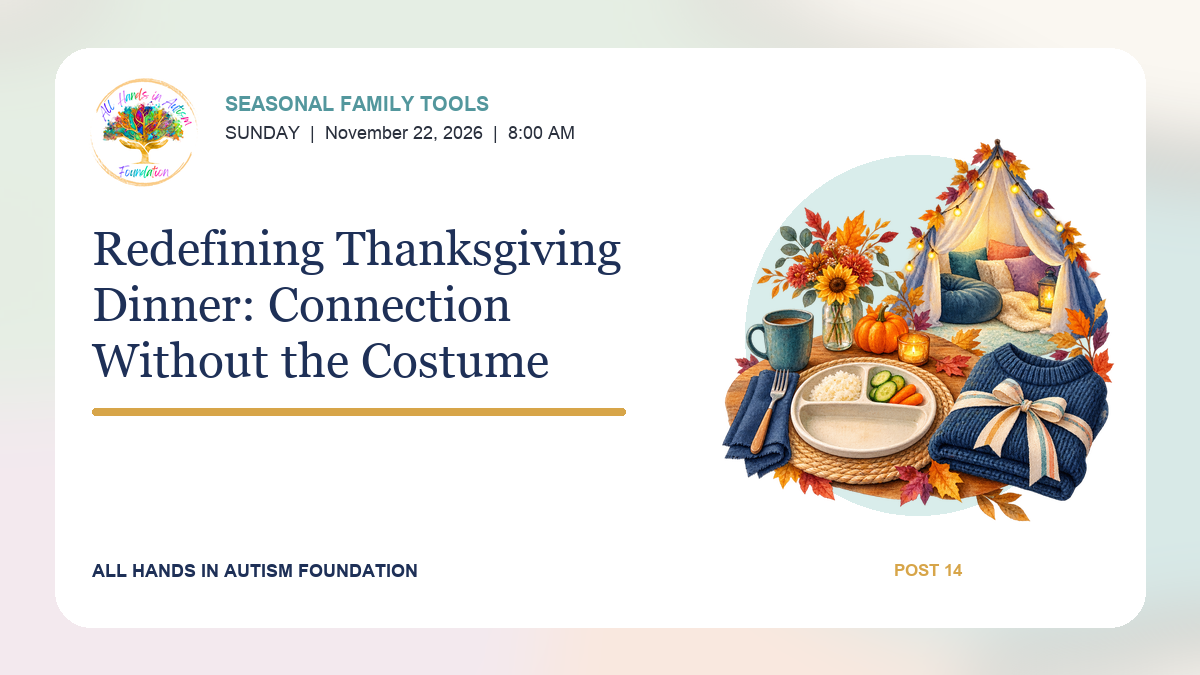
A soft T-shirt in the holiday color is still festive. Pajamas can be a celebration outfit. Tags can be removed. Dress clothes can appear for one brief photo and then disappear.
Offer greeting choices:
- Hug
- High-five
- Wave
- AAC message
- Showing a favorite object
- Time to warm up
- No greeting yet
For photos, prepare the child, keep the session short, and accept a picture that reflects the real family. Looking at the camera is not the same as belonging.
Create a Retreat Plan
Before guests arrive or before leaving home, identify:
- The quiet room
- The sensory kit
- The safe food
- The communication supports
- The exit time
- The adult who can leave early
- The words you will use with relatives
- The next-day recovery plan
A quiet room should not be framed as punishment. It is an access tool.
If the child spends much of the gathering there by choice, that may be the reason they were able to participate at all.
A Flexible Thanksgiving Schedule
Try a smaller structure:
- Arrive after the loudest preparation period.
- Visit for a defined amount of time.
- Eat familiar food.
- Complete one shared tradition.
- Take a quiet break.
- Leave before exhaustion becomes crisis.
Or host at home. Or celebrate on another day. Or order food. Or skip the event.
Flexibility is not disrespectful. It is family-centered planning.
Thanksgiving Access Checklist
- Identify the real purpose of the gathering.
- Confirm safe foods.
- Choose comfortable clothing.
- Prepare greeting choices.
- Set up a quiet retreat.
- Explain boundaries to relatives before arrival.
- Create a visual schedule with an ending.
- Bring an independent transportation option when possible.
- Plan recovery time after the event.
- Avoid measuring gratitude through compliance.
One action for this week: Remove one Thanksgiving expectation that creates more pressure than connection.
Gratitude Does Not Require Overload
All Hands in Autism Foundation believes accessible holidays honor the whole family.
When we tailor traditions, provide sensory choices, and protect communication, we are not lowering the value of the celebration. We are making room for more people to belong.
This Thanksgiving, the win may be turkey and every side dish. It may also be nuggets on a divided plate, a soft shirt, ten peaceful minutes with family, and leaving while the day still feels safe.
That is not a failed holiday. That is a holiday redesigned with care.