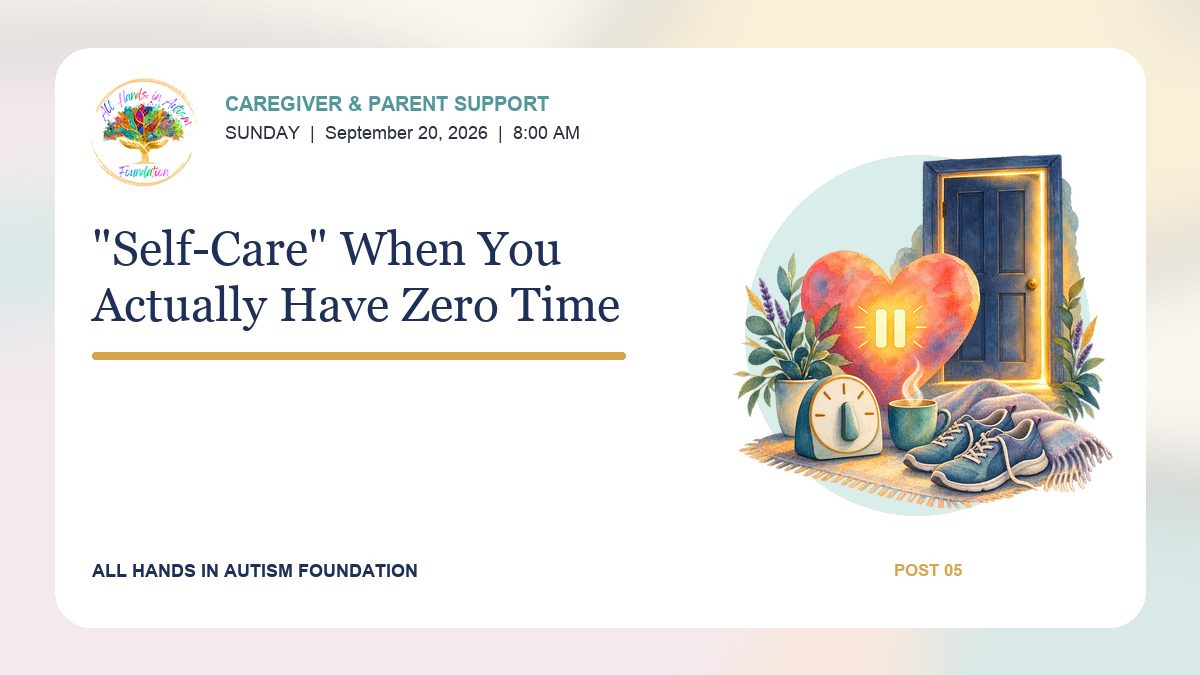
“Take a long bath.”
That is lovely advice—unless someone needs the bathroom, another person is calling “Mom,” the laundry alarm is beeping, and your only uninterrupted minute happened while everyone was looking for you.
Sometimes traditional self-care advice sounds as though it was written for a person with a substitute adult, a quiet house, and a mysterious extra hour hidden between dinner and bedtime.
If you do not have an hour, you are not doing self-care wrong. You may need a version designed for real caregiving life.
Self-Care Is Not a Performance
Self-care has become associated with products, routines, and perfect-looking breaks. But care for the caregiver can be much less glamorous:
- Taking medication on time
- Eating something before late afternoon
- Locking the bathroom door for three quiet minutes when everyone is safe
- Sitting in the driveway with the air conditioning running before going inside
- Saying no to an optional commitment
- Asking someone else to complete one phone call
- Going to bed with the kitchen unfinished
None of those actions will look impressive online. That is part of the point.
FOUNDATION PERSPECTIVE: Self-care should reduce the load. If it becomes another standard you are failing to meet, it is not serving you.
Micro-Breaks Are Still Breaks
VERIFIED FACT: A systematic review and meta-analysis of 22 study samples involving 2,335 participants found that short breaks between work tasks had small, statistically significant effects on increasing vigor and reducing fatigue. These studies were about work-task recovery, not specifically parenting or autism caregiving, so the results should not be overstated.
Still, the evidence supports something caregivers often need permission to believe: a short pause is not meaningless simply because it is short.
A micro-break can be:
- Three slow breaths while the microwave runs
- One song through headphones
- Five minutes outside after another adult takes over
- A cold drink with no multitasking
- A brief stretch before opening the next email
- Sitting down while supervising instead of standing and cleaning
- Turning off nonessential notifications for 15 minutes
The goal is not to create a perfect wellness routine. It is to give your body small chances to stop bracing.
Reduce Before You Add
When caregivers are depleted, the usual advice is to add something: exercise, journal, meditate, meal prep, organize, wake up earlier.
Some of those tools may be helpful. But before adding a new habit, ask:
“What can be removed, shortened, delayed, simplified, or shared?”
Try one of these:
- Use paper plates during a difficult week.
- Repeat simple meals without apologizing.
- Decline one event.
- Postpone a nonurgent project.
- Use grocery pickup if available.
- Ask a provider whether one appointment can be virtual.
- Stop answering messages after a certain time.
- Let a safe person help imperfectly.
Sometimes the most effective “self-care practice” is refusing to keep proving that you can do everything without support.
Asking for Help Is a Skill
“I need help” is honest, but it can feel vulnerable and too broad. A specific request gives the other person a doorway.
Try:
- “Can you stay with the kids from 5:30 to 6:00 while I take a walk?”
- “Can you bring one dinner this week?”
- “Can you sit beside me while I organize these forms?”
- “Can you drive to Tuesday’s appointment?”
- “Can you handle bedtime for one child tonight?”
- “Can you text me on Sunday and ask whether I ate lunch?”
If the answer is no, that does not mean the need was unreasonable. It means that person could not meet that particular request. You are allowed to ask someone else, adjust the request, or look for formal support.
Know When a Micro-Break Is Not Enough
Micro-breaks are useful tools, but they are not a cure for severe burnout, depression, anxiety, unsafe levels of exhaustion, or an unsupported caregiving situation.
MedlinePlus lists ongoing fatigue, sleep changes, irritability, worry, sadness, loss of interest, and physical symptoms among possible signs of caregiver stress. If these symptoms are persistent, worsening, or affecting your ability to function, talk with a health-care professional.
If you are in immediate danger or believe you may harm yourself or someone else, seek emergency help. In the United States, call or text 988 for the Suicide & Crisis Lifeline, or call 911 for an emergency.
Your Zero-Time Self-Care Menu
Choose one from each column:
One minute
- Release your shoulders
- Drink water
- Silence one notification
- Stand in fresh air
Five minutes
- Eat a snack
- Listen to one song
- Write down tomorrow’s top task
- Sit without cleaning
One reduced demand
- Cancel
- Delegate
- Delay
- Do it “good enough”
One connection
- Text a friend
- Ask for a specific favor
- Join Tuesday’s support group
- Contact a professional
One action for this week: Select one five-minute practice and one demand you will remove.
The Open Door Is Not Another Assignment
All Hands in Autism Foundation does not want “reach out for support” to become one more item on your impossible list.
The Foundation’s resource network and Tuesday evening community are meant to help families find practical options, ask questions, and connect with others who understand why a five-minute break may be a major act of care.
You do not need to earn rest by finishing everything. The list will still exist. Your well-being matters while the list is unfinished.