You finally find the exact crackers your child will eat. You buy ten boxes because this is what preparedness looks like.
The next morning, the crackers are apparently unacceptable, suspicious, and personally offensive.
If your grocery cart has ever been built around a safe food that disappeared from favor overnight, you are not alone—and you do not need a side serving of guilt with every meal.
Limited eating can be stressful, expensive, and medically important. It can also be connected with sensory preferences, predictability, oral-motor needs, anxiety, pain, gastrointestinal concerns, swallowing difficulties, or past feeding experiences. The right next step depends on the person.
What Food Chaining Means
VERIFIED FACT: Food chaining was described in the clinical literature as an individualized, nonthreatening approach designed to expand a child’s food repertoire by building on similarities between foods the child already accepts and targeted new foods.
Think of it as creating a bridge rather than making a leap.
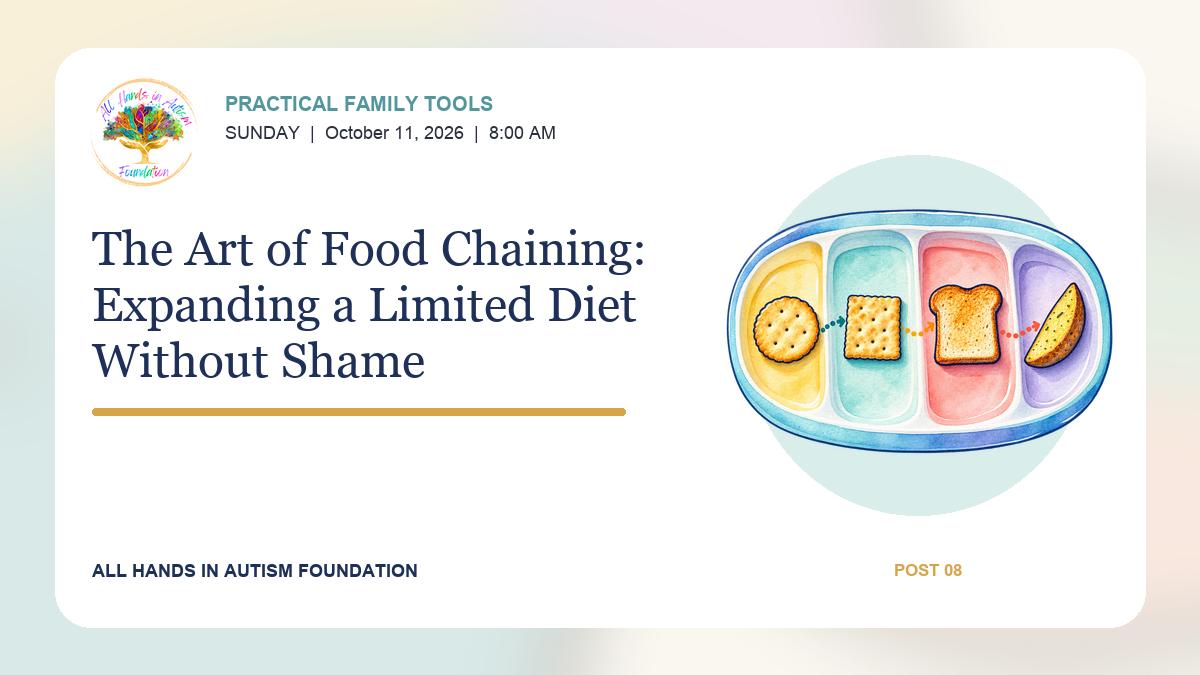
A child who accepts one brand of plain round cracker might first explore:
- The same cracker in a different shape
- A similar cracker from another brand
- A cracker with a slightly different texture
- Toast cut into the familiar shape
- Another dry, mild food with related features
The chain may focus on color, shape, temperature, texture, flavor, brand, packaging, or how the food is served.
There is no universal chain. The starting point is the individual’s accepted food and the features that make it feel safe.
Curiosity Works Better Than Pressure
Pressure can turn a difficult meal into a battle and can weaken trust around food.
A low-pressure approach may include:
- Keeping a reliable safe food available
- Placing a tiny amount of a related food nearby
- Allowing looking, touching, smelling, licking, or tasting without forcing swallowing
- Using neutral language
- Serving new foods repeatedly without presenting refusal as misbehavior
- Keeping portions very small
- Celebrating exploration without demanding a specific outcome
Try saying:
- “This one is similar to your cracker.”
- “You can keep it on the side.”
- “You do not have to eat it.”
- “Would you like it on the same plate or a separate plate?”
- “You noticed the smell—that counts as information.”
Avoid turning every bite into a reward chart or emotional test. Food is not a measure of gratitude, obedience, or parental success.
Do Not Hide the Bridge
Caregivers often trade “sneaky veggie” ideas because they are worried and trying to help. There are situations in which blended ingredients are simply part of a familiar recipe. But deliberately hiding foods can create problems if a child discovers that a trusted safe food has been changed without warning.
For a person who relies heavily on predictability, that discovery may make the entire category feel unsafe.
Whenever possible, protect trust:
- Be honest about changes in a developmentally appropriate way.
- Keep at least one accepted option unchanged.
- Make only one small change at a time.
- Notice whether brand, packaging, presentation, or preparation changed.
- Avoid removing all safe foods to create hunger-driven compliance.
The goal is not to “win” a meal. The goal is a safer and broader relationship with food over time.
Know When Professional Help Matters
Food chaining can be one tool, but significant feeding challenges may require medical and interdisciplinary assessment.
Contact a health-care professional promptly if there is:
- Choking, coughing, gagging, or suspected swallowing difficulty
- Dehydration
- Weight loss, poor growth, or nutritional concerns
- Pain with eating
- Frequent vomiting or severe constipation
- A very small or shrinking food repertoire
- Extreme distress around food
- Concern about pica or eating nonfood items
- A medical condition affecting feeding
A pediatrician may refer to professionals such as a registered dietitian, feeding therapist, speech-language pathologist, occupational therapist, gastroenterologist, dentist, or behavioral-health clinician depending on the concern.
This article is educational and does not replace individualized medical or nutrition advice.
Try a Gentle Food Chain
Choose one accepted food and write down:
- Brand
- Shape
- Color
- Texture
- Temperature
- Flavor intensity
- Packaging
- How it is prepared
- Where it is eaten
Then choose one nearby change. Not five. Not a completely different dinner. One.
Offer the current safe food and the new link together when possible. Track exposure without treating tasting as the only success.
One action for this week: Identify the three features that make one current safe food feel predictable.
Bring the Community to the Table
All Hands in Autism Foundation wants families to have practical tools without shame.
The Foundation community can be a place to exchange food-chain ideas, favorite divided plates, grocery-saving tips, and questions to bring to a professional. Community suggestions should never replace medical guidance, but they can remind a tired caregiver that another family has also owned ten suddenly useless boxes of crackers.
A fed child matters. So do safety, nutrition, trust, and the slow work of making the table feel less frightening.